
Dog Grooming Academy Training: Balancing Knowledge and Technique
Dog grooming academy training emphasizes a balance between understanding canine anatomy, behavior, and mastering technical grooming skills. Trainees learn to identify breed-specific traits, use appropriate tools like slicker brushes and nail clippers, and apply precise clipping techniques dog grooming courses. Proper bathing, drying, and health-conscious practices guarantee safety and comfort for dogs. This thorough approach fosters trust and efficient grooming outcomes. Exploring these areas further reveals the depth of expertise required for professional success.

Understanding Canine Anatomy and Behavior
Although technical skills are essential in dog grooming, a foundational knowledge of canine anatomy and behavior is equally important. Understanding the structure of a dog’s skin, coat, muscles, and skeletal system allows groomers to work efficiently without causing harm or discomfort.
Awareness of breed-specific traits and common health issues further enhances the grooming process. Additionally, recognizing behavioral signals—such as stress, fear https://cosmos.petuniverse.com/dog-grooming-course/, or aggression—enables groomers to adapt their approach, ensuring safety and comfort for both dog and handler.
Mastery of these elements grants groomers the freedom to perform confidently and responsibly, fostering trust and cooperation with their canine clients. This balanced expertise is critical for anyone seeking to excel in dog grooming beyond mere technique.
Essential Grooming Tools and Their Uses
A well-equipped groomer relies on a variety of specialized tools designed to address different grooming needs efficiently and safely. Essential items include slicker brushes for removing mats and loose fur, and combs to detangle and smooth coats.
Nail clippers or grinders maintain proper paw health, preventing discomfort or injury. Thinning shears and scissors shape and trim fur with precision, while clippers handle bulk hair removal.
Ear cleaning tools guarantee hygiene, reducing infection risks. Each tool serves a distinct purpose, enabling groomers to work effectively without restricting canine movement or comfort.
Mastery of these implements allows for freedom in technique, adapting to breed-specific requirements and individual dog temperaments while maintaining safety and quality in grooming practices.
Mastering Bathing and Drying Techniques
Effective use of grooming tools sets the stage for proper bathing and drying, which are fundamental to a dog’s overall cleanliness and coat health.
Mastery in these techniques guarantees the removal of dirt, allergens, and loose hair without causing stress or discomfort to the dog.
Bathing requires selecting suitable shampoos that respect skin pH and coat type, applying them evenly, and rinsing thoroughly to avoid residue.
Drying techniques must balance efficiency with gentleness, using towels and blow dryers at appropriate temperatures and speeds to prevent overheating or matting.
Skilled groomers understand the importance of calming the animal throughout the process, creating a relaxed environment that promotes cooperation.
This balanced approach enables grooming freedom, fostering trust while maintaining ideal coat condition.
Precision in Clipping and Styling
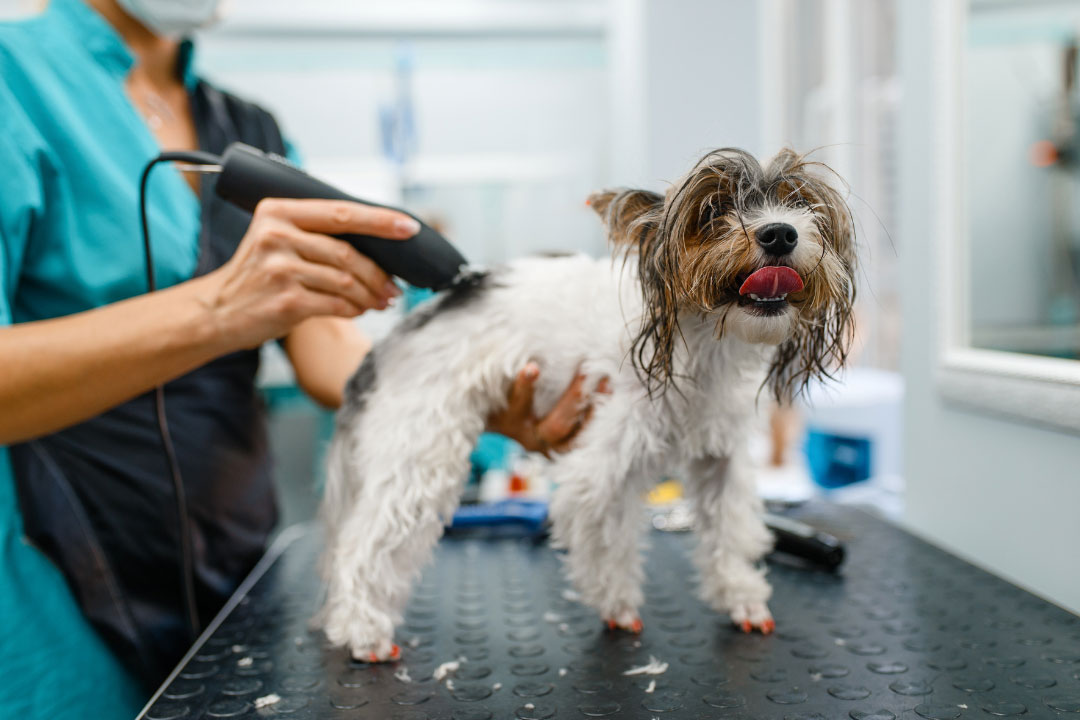
When approaching clipping and styling, meticulous attention to detail guarantees both the dog’s comfort and the desired aesthetic outcome.
Skilled groomers understand that precision shapes the dog’s appearance while respecting its natural form and personality. Techniques vary by breed and coat type, requiring adaptability and a steady hand.
Mastery involves selecting appropriate tools and applying consistent pressure to avoid uneven cuts or skin irritation.
Styling is not solely about conformity but also about enhancing unique features, allowing each dog’s individuality to shine.
Effective clipping balances artistic vision and technical skill, empowering groomers to create looks that prioritize freedom of expression and comfort.
This approach fosters trust, ensuring dogs remain relaxed throughout the process, while groomers achieve ideal results aligned with client expectations.
Health and Safety Practices in Grooming
Maintaining strict health and safety protocols is essential in professional dog grooming to protect both animals and groomers. Adhering to sanitation standards, such as sterilizing tools and cleaning workspaces, minimizes infection risks.
Proper handling techniques prevent stress or injury to dogs, ensuring their comfort and cooperation. Groomers must be aware of each dog’s health conditions to avoid exacerbating issues.
Using appropriate protective gear safeguards groomers from bites, scratches, and exposure to chemicals. Ventilation and ergonomic setups contribute to a safe, efficient environment.
Training that emphasizes these practices empowers groomers to work confidently and responsibly, preserving well-being while allowing freedom in creative expression.
Ultimately, health and safety form the foundation that supports skilled grooming without compromising care or professionalism.
Conclusion
A thorough dog grooming academy training emphasizes the balance between theoretical knowledge and practical technique. Mastery of canine anatomy and behavior, combined with proficiency in essential tools and grooming methods, guarantees effective and safe grooming practices. Precision in clipping and styling enhances the pet’s appearance while prioritizing health and safety. Ultimately, this integrated approach equips groomers with the skills necessary to provide high-quality care, promoting both animal well-being and professional excellence.
… Read More